
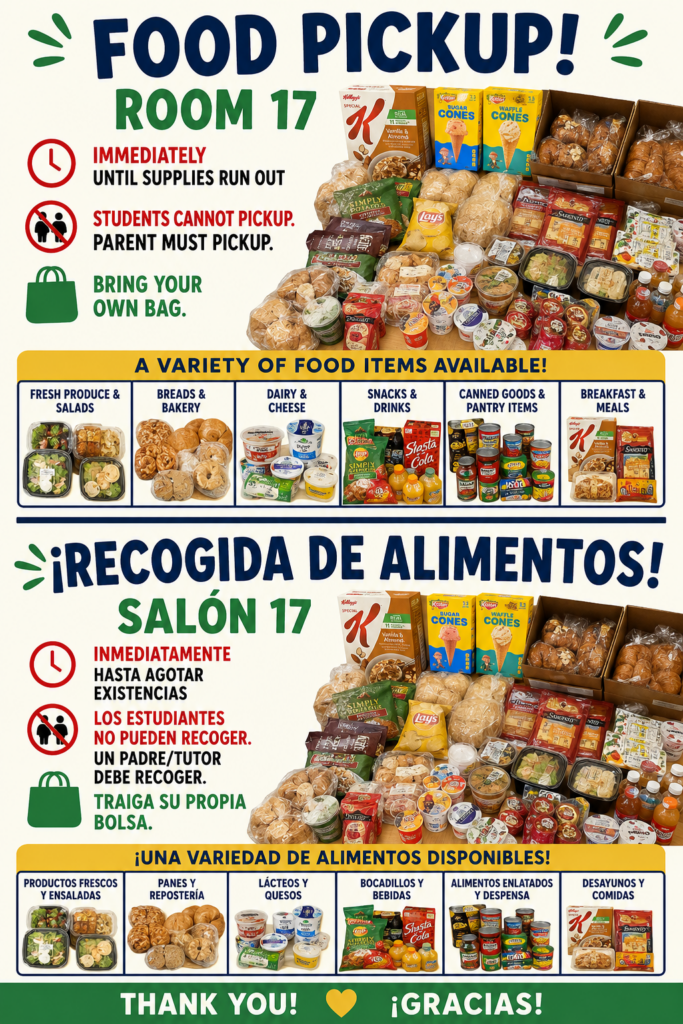
Community food pickup campaign poster featuring bilingual outreach messaging and food distribution information.
The campaign evolved over multiple weeks, using updated photography, improved messaging, bilingual communication, and clearer calls to action to maximize family participation and resource distribution.
Campaign Goals
- Increase family awareness
- Promote food distribution opportunities
- Provide bilingual communication
- Show available food items through photography
- Encourage timely pickup before supplies were exhausted
- Support community needs through consistent outreach
Campaign Impact
Food distribution events became a recurring community resource initiative, with individual distributions typically serving approximately 50–150 families. Consistent communication helped increase awareness, improve participation, and support ongoing resource access for community members.
Campaign Evolution
The Food Pickup Campaign evolved over multiple distribution events. Each week incorporated updated photography, clearer messaging, and refined visual layouts to better communicate available resources and encourage family participation.
Real photographs from each distribution were used to showcase available food items and build trust with families by providing a clear representation of what was being offered.
Challenge
Families were often unaware of available food distribution opportunities or did not have a clear understanding of what resources were being offered. Communications needed to be simple, visual, and accessible to a diverse audience.
Approach
ServiceStacker developed a bilingual outreach campaign using real distribution photography, clear visual hierarchy, and concise messaging. The campaign evolved over multiple weeks, refining both content and presentation to improve engagement and awareness.
Deliverables
- Bilingual promotional poster
- Parent communication content
- Community outreach messaging
- Real-photo visual campaign assets
- Weekly campaign updates
Outcome
The campaign helped increase awareness of recurring food distribution opportunities and encourage consistent family participation. Individual distributions typically served approximately 50–150 families, depending on available inventory and distribution schedules. Through repeated outreach, visual consistency, bilingual communication, and real-photo promotional materials, the campaign supported sustained community engagement and resource distribution over time.